Jemez Pueblo Photo Album
1914 PHOTO ALBUM FROM JEMEZ PUEBLO – NEW MEXICO
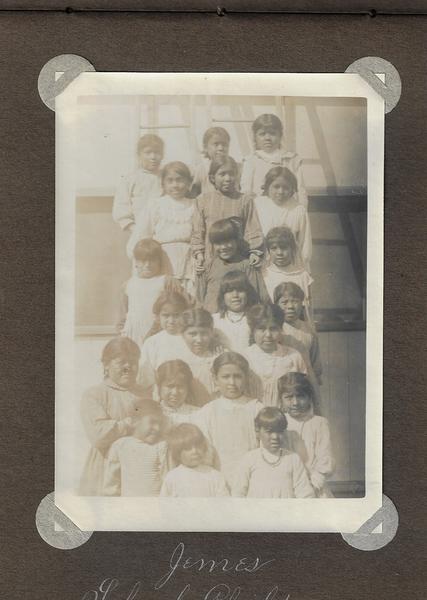
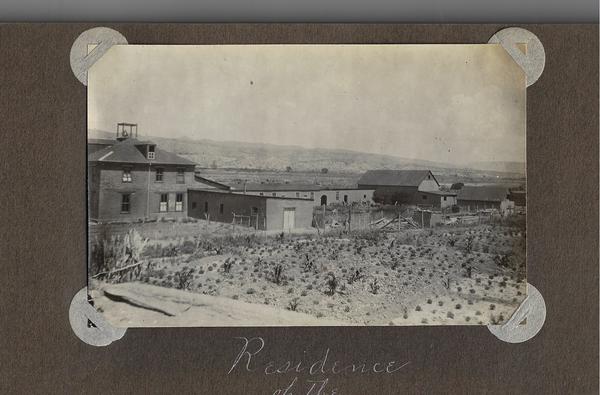
(New Mexico - Jemes Pueblo) A grouping of 15 significantly historical photographs taken at Jemez Pueblo (Walatowa) and dated 1914. 15 silver prints, each 5 x 7 inches. Each photo is identified with the photographer spelling Jemez as Jemes, which is considered an alternative and historically documented spelling for Jemez. The fifteen photos are identified as 1) Jemes Indian Pueblo – 1914; 2) Jemes Plaza – 1914; 3) Residence of the Franciscan Fathers – Jemes, N. Mex; 4) Interior of San Diego Church – James, N. Mex. 1914; 5) Jemes School Children 1914; 6) Paulita Casquito and her papoose; 7) Jose Antonito Lucen and his papoose; 8) Three Generations; 9) Paulita Casiquito, Precingula Gabaguis and papoose; 10) Sisters in law, Manuelita and Margarita; 11) Bibiana Fraqua and Two Papooses; 12) Jose Agapito Mora; 13) James Dancers; 14) Jose Paulin Toya; and 15) Jose Vigil.
The Franciscan Fathers first made contact with the Towa speaking Jemez people during the Coronado Expedition (1541) and by the 17th century were firmly established with the Mission San Jose de los Jemez (1621-1625). In 1914, the date of this album, the Franciscan priests at Jemez were from the Cincinnati-based St. John the Baptist Province.
“A renewed Franciscan ministry began at Jémez in 1902 when Archbishop Bourgade called from the Cincinnati province friars with German names. If it lacked the stern regimentation of Father Ruiz's tenure, it nevertheless prospered. From the leaky convento attached to Father Mariller's church, where "the Brother had to wear raincoat and rubbers while preparing the meals," the brown robes moved to a fifteen-acre enclave some five hundred yards west. There they established headquarters for a sprawling parish of more than 3,000 square miles and thirteen mission stations. There, too, as part of a complex that included a large residence for the friars, a school, and a convent for the Franciscan sisters who came to teach, Father Barnabas Meyer blessed a new chapel on the feast of San Diego in November 1919. More or less neo-Gothic, it burned in 1937 and was replaced the following year by a handsome New Mexico mission-style building displaying the best of Jémez carpentry.”
Vg cond.
Source: National Park Service
$2595.00