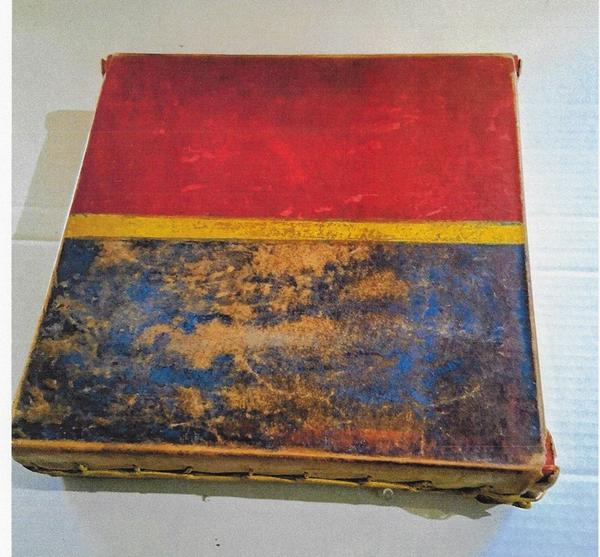
LAKOTA SQUARE HEAD DRUM – C. 1860’S - 1870’S
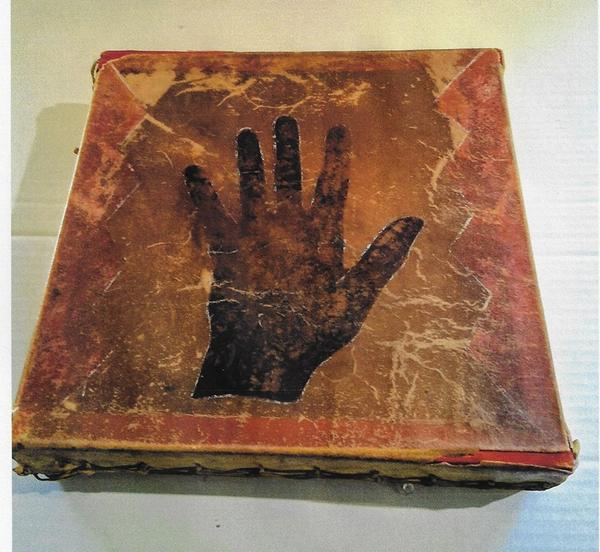
LAKOTA SQUARE HEAD DRUM – C. 1860’S - 1870’S
This drum is attributed to the Assiniboine or Yanktonai Lakota. Following the 1862 Minnesota conflict known as the Dakota War, the Yanktonai made treaties with the United States. Many of those called
Lower Yanktonai settled at Fort Peck, home today to the Assiniboine and Sioux. Those called Upper Yanktonai settled mostly at Standing Rock Reservation, where Sitting Bull and his people also lived.
In Indigenous traditions drums are considered sacred, living beings rather than mere instruments. Their rhythmic beat represents the “heartbeat of Mother Earth” and the pulse heard in the womb. It is the rhythm of Mother Earth and the human heart. The Voice in ceremonial song opens the throat to move energy through the entire body, to the level of spirit. Among the Lakota people the drum occupies a position of great cultural and symbolic power. Regarded as a living entity, the drum is viewed simultaneously as a spiritual guardian and a musical instrument, a living tradition and a reference to a past way of life. Hand drum symbolism connects directly to the circle of life, animal sacrifice, and spiritual visions.
Painted hands on drum-heads carry deep significance as protective symbols, tokens of healing, and pathways to the spirit world. Hand-prints often represent the therapeutic and restorative powers originating from the Creator or a tribal medicine person. In Yanktonai and broader Lakota traditions, a black hand symbol painted on a drum typically signifies success in hand-to-hand combat, serving as a mark of great honor, bravery, and martial achievement for a warrior. The mark of a blackened palm or hand-print was used to indicate that the owner had directly engaged and overcome an enemy in battle.
Anthropological records note that impressions of black hands on ceremonial or personal objects (such as shields and drums) were sometimes recorded as a symbol of "death" or a "captive taken" during tribal conflicts. Many Yanktonai drums (like those famously created by the holy man Siyosapa feature powerful natural and spirit figures, with the black hand acting as an identifier of the warrior's or healer's sacred duty to their community. Because the drum is considered a living entity and a direct connection to the heartbeat of the Earth, the symbols painted on it reflect the deeply personal, spiritual, or historical legacy of the drummer. In Lakota and Yanktonai Dakota traditions, the painted hand—often seen on drums and other sacred items—symbolizes the Creator, a connection to the spirit world, or a sacred vow.
Source: Black Hills State University
Sissy Goodhouse of the Standing Rock Reservation
Detroit Institute of Art
LAKOTA Square Head Drum. C. 1860’s – 1870’s. 11 ½ x 12 ½ x 3 inches. Made from hide, wood and paint pigment. Expected cultural wear, overall in vg cond.